
The world is grappling with the challenges of climate change, and the pursuit of sustainable energy solutions has become a pressing imperative.
The energy storage industry is emerging as a pivotal player in this quest, with sodium ion battery technology being precision-crafted to revolutionize the energy storage landscape.
Sodium ion battery technology has emerged as a promising alternative to traditional lithium-ion batteries, offering a more cost-effective and sustainable solution for energy storage.
This innovative technology has the potential to revolutionize the way devices and vehicles are powered, making renewable energy more accessible and affordable.
The future of energy storage hangs in the balance, as sodium ion batteries threaten to disrupt the dominance of lithium-ion batteries with their significantly lower production costs.
Sodium Ion Battery Technology Offers Lower Production Costs Than Traditional Lithium Ion Batteries
Sodium ion battery technology offers several advantages, including cost savings of up to 30% compared to traditional lithium-ion batteries.
The abundant availability of sodium makes it an attractive alternative to lithium, which is scarce and often sourced from environmentally harmful mining operations.
Sodium ion batteries also have the advantage of scalability, as they can be easily integrated into existing manufacturing infrastructure.
Sodium Ion Cells Have Enhanced Thermal Stability And Long Cycle Life For Energy Storage Solutions
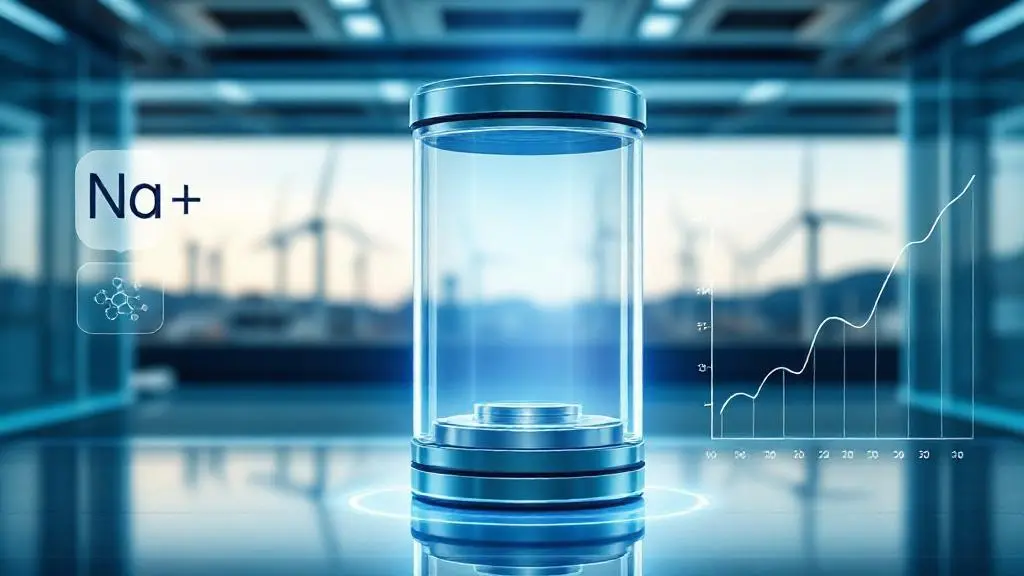
The emergence of sodium ion cells presents an exciting development in the field of energy storage, offering a potentially more cost-effective and sustainable alternative to traditional lithium-ion batteries.
Sodium ion cells operate on a similar principle to lithium-ion batteries but use sodium instead, which is more abundant and less expensive.
With enhanced thermal stability and a long cycle life, these cells are poised to revolutionize the way energy is stored.
China Leads The Early Push In Sodium Ion Battery Technology With Companies Like CATL And BYD Investing
China is leading the charge in sodium ion battery technology, with companies like CATL and BYD investing heavily in research and development.
CATL has successfully developed a sodium ion battery with comparable performance to traditional lithium-ion batteries, marking a major breakthrough in the field.
This breakthrough has the potential to revolutionize the energy storage industry, making sustainable energy more accessible and affordable.
CATL Launches Naxtra Sodium Ion Product Line With Mass Production Capabilities And Lower Costs
The launch of CATL’s Naxtra sodium ion product line marks a significant milestone in the evolution of battery technology.
With mass production capabilities and lower costs, CATL is poised to disrupt the market, offering a more sustainable and cost-effective alternative to traditional lithium-ion batteries.
The Naxtra product line is designed to be a game-changer, offering a more sustainable and cost-effective alternative to traditional lithium-ion batteries.
Tips for Understanding Sodium Ion Batteries in Electric Vehicles
Sodium ion batteries are a promising alternative to traditional lithium-ion batteries, offering a potentially more sustainable and cost-effective solution for electric vehicles.
Several companies have started to integrate sodium ion batteries into their vehicles, including the JMEV EV3 and low-speed EVs.
These batteries have shown significant potential in reducing production costs and environmental impact.
Peak Energy Deploys Sodium Ion Batteries For Grid Scale Energy Storage With Lower Operations And Maintenance
Peak Energy is deploying sodium ion batteries for grid-scale energy storage, revolutionizing the market with cost-effective solutions.
Sodium ion batteries are powering homes and industries with reliable and efficient energy storage systems, reducing carbon footprint and reliance on fossil fuels.
The introduction of sodium ion batteries is transforming the energy landscape with innovative and scalable battery solutions.
Sodium Ion Batteries Have Lower Energy Density Than High-End Lithium Ion Cells But Improving Each Year
Sodium ion batteries are gaining traction, offering a potentially more cost-effective and abundant alternative to lithium.
Researchers are continuously exploring ways to improve their performance, enhancing the cathode material, anode design, and overall cell architecture.
Lower energy density is a major drawback, but innovation is slowly bridging the gap between sodium and lithium-based cells.
Sodium Ion Chemistries Offer The Prospect Of Building New Supply Chains Less Reliant On China For Energy
Sodium-ion batteries are not inherently inferior to their lithium-ion counterparts, with recent advancements making them a viable alternative.
The notion that lithium-ion is the only viable option for energy storage is being challenged, with sodium-ion batteries offering potential cost and sustainability benefits.
The sodium-ion battery market is expected to grow at a CAGR of 32.6% from 2023 to 2030, driven by increasing demand for sustainable and cost-effective energy storage solutions.
Government Policy And Tax Credits Will Play A Crucial Role In The Adoption Of Sodium Ion Battery Technology
Government policy and tax credits will significantly influence the development and integration of sodium ion battery technology.
These incentives can help offset the high upfront costs associated with transitioning to new energy storage solutions, encouraging investment in research and development.
Strategic policy initiatives can facilitate the creation of economies of scale, essential for reducing the cost of sodium ion batteries and making them more attractive to consumers.
The implementation of government policy and tax credits is crucial for driving the growth and adoption of sodium ion battery technology.
Sodium Ion Battery Technology is poised to play a vital role in shaping the future of the energy storage industry, with its lower production costs and improved performance.
The development of this technology is not only timely but also crucial in reducing reliance on fossil fuels, with the global demand for renewable energy on the rise.
The prospect of a more sustainable and efficient energy storage system is a promising one, and it will be fascinating to see how this technology continues to advance and transform the industry in the years to come.